
OSG Drill Equivalents
Index
The right OSG drill equivalent depends on the application. Match the replacement to the workpiece material, hole diameter and depth, coolant delivery, machine setup, and the problem you need to solve.
If an OSG carbide drill is chipping, wearing unevenly, packing chips, or becoming difficult to source, identify the cause before changing tools. Check first for a current OSG replacement or successor. For cross-brand options, evaluate drills from Sandvik Coromant, Mitsubishi Materials, Guhring, NACHI, Kennametal, and other manufacturers against the same process requirements.
How to find the right OSG drill equivalent
OSG produces solid carbide drills for different materials, hole depths, coolant systems, and drilling conditions. Its AD and ADO ranges include short-length and through-coolant drills for several depth ratios. Other OSG ranges address stainless steel, small diameters, three-flute drilling, and more specialized applications.
This makes family-level cross-referencing unreliable. Start with the exact OSG part number and record its diameter, usable drilling depth, shank dimensions, coolant configuration, geometry, and intended material group. Use those specifications to screen potential replacements.
Source: OSG Official Website (https://www.osg.co.jp/en/products/drill/spec/ad-ado.html)
When to consider an alternative
A tool change should address a defined machining or supply problem. Otherwise, the same failure may continue with the new drill.
Recurring chipping or early tool failure
Edge and corner chipping can result from excessive runout, unstable workholding, unsuitable cutting data, insufficient coolant, poor chip evacuation, or use beyond the established wear limit. Check these conditions before starting a replacement trial.
If the process remains unstable after correcting the setup, evaluate drills with different carbide grades, coatings, point geometries, margins, flute designs, or coolant configurations. Use the observed failure mode to narrow the options.
Poor chip evacuation or hole quality
Long, stringy, or packed chips can damage the cutting edge, reduce surface quality, and cause unexpected breakage.
Record the chip shape, coolant pressure and flow, hole depth, and the point at which buildup begins. A different flute or coolant-hole design may help, but test it with the manufacturer's recommended cutting conditions.
Source: Sandvik Coromant Official Drilling Knowledge and Troubleshooting Content
Changes in material or hole geometry
A drill selected for one process may become unsuitable after a change in material grade, hardness, hole depth, entry surface, tolerance, or bottom geometry. Stainless steel, hardened steel, cast iron, aluminum, titanium, and heat-resistant alloys place different demands on the cutting edge.
Review the application whenever these conditions change. Moving from a shallow hole to a deep hole, for example, puts more emphasis on coolant delivery and chip evacuation.
Availability, lead time, or discontinuation
Supply constraints can also force a tool change. An older range may be discontinued, certain diameters may become difficult to source, or lead times may no longer fit the production schedule.
Record the existing drill and process specifications before selecting another product. A supply-driven replacement must still meet the original machining requirements.
Check for a current OSG replacement
For a discontinued drill, review OSG's current catalog and product-status information first. OSG may list a successor within its existing product range.
Confirm the part number and product status
Record the product family, list or EDP number, diameter, flute length, overall length, shank size, coolant configuration, and drilling depth.
The family name alone is not enough for an accurate cross-reference. Dimensions and availability often vary by size within the same series.
Look for an OSG successor before changing brands
OSG Canada, for example, identifies specified products in the A Brand ADO-TRS family as replacements for certain discontinued EXOPRO Mega Muscle three-flute drills.
Successor information is not available for every discontinued drill, but an official OSG recommendation provides the clearest starting point when one exists.
Source: OSG Official Website (https://osgcanada.com/brands/exo/exocarb-dg/)
Specifications to compare
Use the current OSG drill and its proven process as the baseline. Diameter matters, but it is only one part of the cross-reference.
| Comparison factor | What to confirm |
|---|---|
| Workpiece | Material grade, hardness, heat treatment, and surface condition |
| Hole geometry | Diameter, tolerance, depth-to-diameter ratio, blind or through hole, and bottom geometry |
| Entry and exit | Flat, angled, curved, interrupted, cross-hole, or pre-drilled surface |
| Drill dimensions | Overall length, flute length, usable length, shank diameter, and holder compatibility |
| Point and cutting geometry | Point angle, margins, cutting-edge design, flute geometry, and pilot-hole requirements |
| Coolant | External or internal delivery, pressure, flow, concentration, and filtration |
| Machine and holder | Spindle speed, power, rigidity, holder type, overhang, and measured runout |
| Cutting data | Cutting speed, feed per revolution, pecking strategy, and entry conditions |
| Current failure mode | Chipping, flank wear, chip packing, breakage, dimensional variation, or poor surface finish |
| Performance target | Tool life, hole quality, cycle time, process consistency, and cost per acceptable hole |
Prioritize the factors connected to the current problem. A drill chosen to improve chip evacuation in a deep hole may be a poor choice for reducing corner chipping in a shallow application.
OSG drill alternatives to evaluate
The following solid carbide drill ranges cover different materials, depth ratios, coolant arrangements, and geometries. Treat them as candidates for application review, not confirmed one-to-one replacements.
Check the exact product specifications and complete a controlled machining trial before changing the production tool.
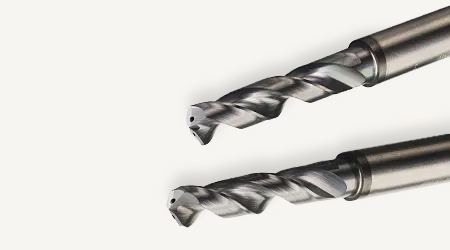
Sandvik CoroDrill 860-GM
Source: Sandvik Coromant Official Website
https://www.sandvik.coromant.com/en-us/tools/drilling-tools/solid-carbide-drills/corodrill-854-856
https://www.sandvik.coromant.com/en-us/tools/drilling-tools/solid-carbide-drills/corodrill-854-856
Sandvik Coromant describes the CoroDrill 860 with -GM geometry as a solid carbide drill for several material groups. Its primary application groups include ISO P, M, K, and H. This makes the range relevant to general-purpose applications that cover several common workpiece materials.
Check the required diameter, hole depth, coolant configuration, point geometry, and Sandvik cutting recommendations against the current process. Similar material coverage does not guarantee dimensional or operational interchangeability.
Guhring RT 100 U

Source: Guhring Official Website
https://guhring.com/ProductsServices/SeriesDetails?Series=5525
https://guhring.com/ProductsServices/SeriesDetails?Series=5525
Guhring's RT 100 U range includes solid carbide drills in several depth ratios and coolant configurations. Product listings specify details such as point angle, coating, shank style, and material application group.
Select by exact series. The 3xD, 5xD, 7xD, and 12xD versions can differ in specifications and intended use.
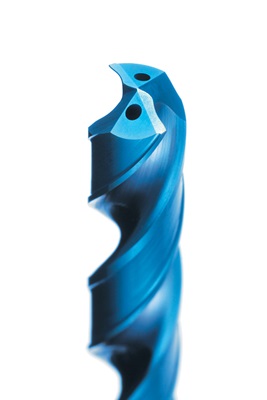
NACHI Aqua REVO Oil Hole Drill
Source: Nachi America Official Website
https://www.nachiamerica.com/products/129-aqua-drill-ex-oil-hole-deep-drill-series/
https://www.nachiamerica.com/products/129-aqua-drill-ex-oil-hole-deep-drill-series/
NACHI's Aqua REVO Oil Hole Drill Series is available in 3D, 5D, and 8D versions. NACHI describes its REVO Power Cooler oil-hole geometry as supporting cooling, lubrication, and chip evacuation across multiple workpiece materials.
Consider this range when heat, coolant delivery, or chip evacuation is limiting the current process. Confirm the diameter, depth series, holder compatibility, and coolant requirements before testing.
Kennametal KenDrill HP

Source: Kennametal Official Website
https://www.kennametal.com/us/en/products/metalworking-tools/holemaking/solid-carbide-drills/kenna-universal-drills.html
https://www.kennametal.com/us/en/products/metalworking-tools/holemaking/solid-carbide-drills/kenna-universal-drills.html
Kennametal's KenDrill HP range includes internal-coolant solid carbide drills for materials such as steel, cast iron, and stainless steel. Its 12xD range provides a longer-reach option for through-coolant drilling.
This range may suit applications where hole depth and chip removal are primary concerns. Confirm the status and specifications of the exact part number because availability can vary within the family.
OSG drill alternatives by application
Use this table to focus your product research. Final selection still depends on the exact part number, machine setup, and trial results.
| If the current OSG application involves... | Product family to compare | Why compare it | What to verify before switching |
|---|---|---|---|
| General solid carbide drilling across multiple materials | Sandvik CoroDrill 860-GM | Solid carbide drilling across multiple material groups | Material group, diameter, depth, coolant, and geometry |
| Standard carbide drilling at defined depth ratios | Guhring RT 100 U | Several depth ratios and coolant configurations | Exact series, point angle, material group, and dimensions |
| Cooling or chip-evacuation problems | NACHI Aqua REVO Oil Hole | Oil-hole geometry developed for cooling and chip evacuation | 3D, 5D, or 8D series, diameter, coolant, and cutting data |
| Deeper through-coolant holes in steel, cast iron, or stainless steel | Kennametal KenDrill HP | Longer internal-coolant solid carbide options | Exact product status, depth, dimensions, and machine capability |
How to replace a discontinued OSG drill
Document the current tool and process
Capture the full specification while the current drill is still available and performing successfully:
- OSG family, EDP number, or list number
- Nominal diameter and tolerance
- Overall length, flute length, and usable length
- Shank diameter and toolholder
- Point and cutting-edge geometry
- Coolant-hole configuration
- Recommended drilling depth
- Workpiece material and hardness
- Cutting speed and feed
- Tool life and wear limit
- Hole tolerance and surface-finish requirements
Build a replacement shortlist
Include the official OSG successor, if one is listed, alongside suitable products from other manufacturers. Assess every candidate against the same baseline. A newer drill may require different cutting data or process adjustments.
When no official successor is available, use the discontinued drill's specifications and machining records to identify candidates. Ask the manufacturer or distributor to confirm application details that are unclear in the published data.
Check more than the dimensions
Drills with the same nominal diameter and shank size can use different point geometries, flute designs, carbide grades, coatings, margins, coolant holes, and cutting parameters.
Describe a drill as direct, drop-in, or interchangeable only when that relationship has been confirmed for the exact part numbers. All other cross-brand matches require testing.
How to test an OSG drill replacement
Run each candidate against a documented baseline. Keep the machine, holder, workpiece, hole geometry, coolant system, and inspection method consistent wherever practical.
Measure the current OSG drill
Record the performance of the stable process before introducing another tool. Include runout, hole count, total cutting length, wear progression, hole diameter, roundness, surface finish, cycle time, tool changes, and unplanned stops.
These measurements show whether the replacement maintains or improves the process. Without them, a trial may appear successful while tool life or hole quality has declined.
Use the new manufacturer's cutting data
Start with the speeds and feeds published for the exact replacement drill and workpiece material. Carrying over the OSG settings can produce misleading results because carbide grade, coating, geometry, margins, and coolant design affect the operating range.
Once the trial is stable, change one major variable at a time. This makes it easier to separate the effects of speed, feed, coolant, and tooling.
Evaluate production cost, not purchase price alone
Track acceptable hole count, cycle time, tool-change frequency, inspection results, and unplanned downtime. Use cost per acceptable hole as a final comparison metric.
A higher-priced drill may reduce total machining cost through longer life, better process consistency, or shorter cycles. The production trial should confirm that benefit.
Frequently asked questions
What is equivalent to an OSG carbide drill?
There is no universal equivalent. Match the exact OSG tool by material, diameter, hole depth, dimensions, coolant configuration, geometry, machine conditions, and required hole quality. Then evaluate suitable product families from Sandvik Coromant, Mitsubishi Materials, Guhring, NACHI, Kennametal, and other carbide-drill manufacturers.
Is there a direct replacement for an OSG ADO drill?
The ADO family covers multiple sizes and drilling-depth ranges. Identify the exact ADO series and part number, check the current OSG catalog, and review all relevant specifications. Diameter or drilling depth alone cannot confirm a direct replacement.
What should I do if my OSG drill is discontinued?
Check whether OSG lists a successor, then review the old and new tool specifications. If no successor is available, use the discontinued drill's dimensions, geometry, cutting data, and performance records to build a cross-brand shortlist.
Can I use the same speeds and feeds with an equivalent drill?
Use the replacement manufacturer's starting data for the exact drill and workpiece material. Optimize the settings after the process is stable while monitoring wear, chip evacuation, hole quality, cycle time, and tool life.
Should I change brands if my carbide drill keeps chipping?
Check runout, holder stability, cutting data, coolant supply, chip evacuation, entry conditions, and wear first. If chipping continues under controlled conditions, test a drill with a grade, coating, geometry, or coolant design suited to the observed failure.
Find a solid carbide drill for your application
Define the workpiece, hole geometry, coolant supply, machine conditions, and current failure mode. Use those details to identify suitable drills, then verify the shortlist through controlled machining trials.