
Nachi vs. Sandvik Carbide Drills
Index
Introduction
Choosing between Nachi America and Sandvik Coromant starts with the application—not the brand. Both companies offer solid carbide drills for production machining, but their product lines are organized differently.
This comparison focuses on representative solid carbide drill families. For purchasing, process engineering, and tooling teams, the key question is which lineup best matches the workpiece material, hole depth, coolant strategy, hole-quality requirements, and sourcing timeline. In most cases, the right choice depends more on the application requirements than on a simple brand ranking.
Key Takeaways
- Nachi America is easier to evaluate by machining challenge, including general high-performance drilling, through-coolant drilling, micro drilling, and flat-bottom or burr-sensitive applications.
- Sandvik Coromant is well suited to catalog-driven selection by ISO material group, diameter, usable length, L/D ratio, availability, and made-to-order status.
- CoroDrill Dura 462 and CoroDrill 460 cover a broad range of materials, while CoroDrill 860 variants provide a more material-specific selection path for ISO-P, ISO-M, and ISO-N applications.
- Before changing drills, confirm the workpiece material, hole depth, coolant delivery method, tolerance target, burr requirements, reconditioning options, and product availability.
Nachi America: Application-Focused Drill Families

Source: Nachi America Official Website
https://www.nachiamerica.com
https://www.nachiamerica.com
Nachi America’s Cutting Tool Division offers drills, end mills, and taps for precision machining. Its solid carbide drill portfolio is organized around common application needs, including high-performance drilling, internal coolant, micro-hole machining, and flat-bottom drilling. This structure is useful for buyers who already know the production problem they need to solve.
The Aqua REVO Drill Series by Nachi

Source: Nachi America Official Website
https://www.nachi-technologypark.jp/tool/product02/
https://www.nachi-technologypark.jp/tool/product02/
The Aqua REVO Drill Series emphasizes carbide development, wear resistance, chipping resistance, a straight cutting edge, and REVO-D coating for use across multiple materials. The Aqua REVO Oil Hole Drill Series adds through-coolant capability to improve cooling, lubrication, and chip evacuation. For smaller diameters, Aqua REVO Drill Micro focuses on durability, rigidity, stable cutting, and chip control. Aqua Drill EX Flat is designed for flat-bottom holes, inclined or curved entry surfaces, and reduced exit burrs.
Sandvik Coromant: Catalog-Driven Selection
Source: Sandvik Coromant Official Website
https://www.sandvik.coromant.com/en-us
https://www.sandvik.coromant.com/en-us
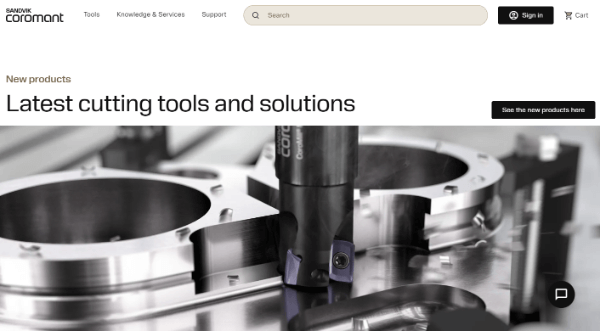
Sandvik Coromant organizes its solid carbide drills within a large, searchable product system. The uploaded product-list image shows the category for solid twist drills with symmetrical points, with more than 6,000 listed products. Buyers can narrow the catalog by workpiece material, cutting diameter, coolant entry style, and other technical criteria.
CoroDrill Series by Sandvik
Source: Sandvik Coromant Official Website
https://www.sandvik.coromant.com/en-us/tools/drilling-tools/solid-carbide-drills/corodrill-860
https://www.sandvik.coromant.com/en-us/tools/drilling-tools/solid-carbide-drills/corodrill-860
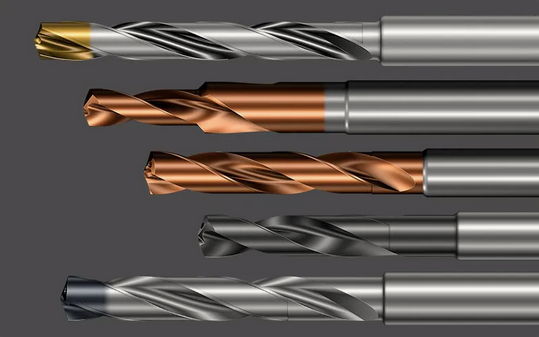
Visible product families include CoroDrill 460, CoroDrill Dura 462, CoroDrill 860-PM, CoroDrill 860-MM, CoroDrill 860-NM, CoroDrill 861, and CoroDrill Delta-C. The catalog also displays ISO material indicators such as P, M, K, N, S, and H. This makes Sandvik especially useful for teams that want to screen options by material group, diameter, usable length, L/D ratio, and availability before requesting a quote or contacting a distributor.
Representative Solid Carbide Drill Families
The clearest way to compare the two brands is by application need. Nachi America presents a focused set of application-oriented families, while Sandvik Coromant provides a broader catalog with both multi-material and material-specific options. The table below is intended for initial shortlisting; final selection should still be validated through application review or machining tests.
| Brand | Representative Drill Family | Best Fit | Key Selection Notes |
|---|---|---|---|
| Nachi America | Aqua REVO Drill Series | General high-performance solid carbide drilling across multiple materials. | Emphasizes carbide design, wear resistance, chipping resistance, and REVO-D coating. |
| Nachi America | Aqua REVO Oil Hole Drill Series | Applications that require internal coolant for cooling, lubrication, and chip evacuation. | Available in 3D, 5D, and 8D list-number options. |
| Nachi America | Aqua REVO Drill Micro Series | Small-diameter holes where breakage resistance and chip evacuation are critical. | Available in 5D and 10D list-number options. |
| Nachi America | Aqua Drill EX Flat Series | Flat-bottom holes, inclined or curved entry surfaces, and applications with strict exit-burr requirements. | Uses a 180-degree flat cutting edge and may reduce the need for a center drill or end mill. |
| Sandvik Coromant | CoroDrill 460 | Standard solid carbide drilling across a broad range of ISO material groups. | Catalog listings show P, M, K, N, S, and H material indicators, depending on the item. |
| Sandvik Coromant | CoroDrill Dura 462 | Operations that need a multi-material solid carbide drill family. | Listed in the catalog as a solid carbide drill for multi-material applications. |
| Sandvik Coromant | CoroDrill 860-PM / 860-MM / 860-NM | Applications that benefit from a more material-specific selection path. | Visible variants align with ISO-P, ISO-M, and ISO-N machining categories. |
| Sandvik Coromant | CoroDrill 863 | Composite, CFRP, metal-stack, and aerospace drilling applications. | Designed for composite and stacked-material combinations, including aluminum, titanium, stainless steel, and CFRP. |
Material Compatibility and Application Range
Nachi America provides a straightforward shortlisting path when the machining challenge is already defined. According to Nachi’s product information, Aqua REVO Oil Hole covers materials ranging from stainless steel to hardened materials. Aqua Drill EX Flat supports flat-bottom drilling in oil and gas, automotive, and general machining applications. Aqua REVO Drill Micro is aimed at small-diameter drilling, where rigidity and chip evacuation can have a major effect on process stability.
Sandvik Coromant offers a more granular material-selection workflow. The product-list image shows ISO material markers across multiple drill families, including P, M, K, N, S, and H. CoroDrill Dura 462 is positioned as a multi-material option, while CoroDrill 860 variants divide the selection more directly by material group. CoroDrill 863 is a specialized option for composites and stacked materials, rather than a general-purpose substitute for conventional metal drilling.
Hole Depth, Diameter, and Process Requirements
Hole geometry can quickly narrow the field. Nachi communicates depth capability through product families such as Aqua REVO Oil Hole in 3D, 5D, and 8D options and Aqua REVO Drill Micro in 5D and 10D options. This makes the lineup easy to scan when the application calls for standard-depth, deeper, micro, or flat-bottom drilling.
Sandvik’s catalog displays dimensional data directly in the product table. The uploaded image includes columns such as DC, LU, and ULDR, which support filtering by cutting diameter, usable length, and length-to-diameter ratio. For teams comparing many closely related sizes, this can reduce back-and-forth before a quote request. The catalog also brings stock and made-to-order status into the selection process at an early stage.
Tool Life, Chip Control, and Hole Quality
Nachi’s positioning for Aqua REVO and Aqua Drill EX centers on durability, wear resistance, chipping resistance, cutting-edge geometry, coolant delivery, and burr control. These families are worth evaluating when an existing process has inconsistent tool life, corner chipping, poor chip evacuation, or excessive exit burrs. The best match depends on whether the root cause is the material, hole depth, coolant access, hole diameter, or entry and exit geometry.
Sandvik positions its solid carbide drills around process security, manufacturing economy, and hole quality. Its solid carbide drill category states that the tools can support good hole quality and IT8-capable tolerances. CoroDrill 863 adds a more specialized quality focus for composites and stacks, including low-thrust geometries intended to reduce delamination and exit burrs. Reconditioning options may also be relevant when comparing total tooling cost.
Availability and Purchasing Considerations in the U.S.
U.S. buyers should compare both technical fit and purchasing friction. Nachi America provides U.S.-based contact information, authorized distributor access, and technical support through its Cutting Tools organization. This may appeal to teams that prefer distributor-led sourcing or want application support for a specific Nachi drill family.
Sandvik’s product-list interface brings availability into the comparison earlier. Visible statuses include available, available within one week, and made to order. The same catalog environment supports account sign-in, cart functions, price and availability checks, and side-by-side product comparison. For plants working against fixed production schedules, this availability visibility may be as important as the tool’s nominal performance.
Which Brand Should You Shortlist First?
Start with Nachi America when the machining problem maps clearly to one of its application-focused families. Aqua REVO covers general high-performance drilling; Aqua REVO Oil Hole addresses through-coolant and chip-evacuation needs; Aqua REVO Micro is designed for small holes; and Aqua Drill EX Flat targets flat-bottom and burr-sensitive applications. This approach works well when the buyer wants a focused group of candidates rather than a large catalog search.
Start with Sandvik Coromant when the selection process requires detailed filtering by material group, diameter, usable length, L/D ratio, and availability. CoroDrill 460 and Dura 462 cover broad or multi-material applications, while CoroDrill 860 variants provide a more material-specific path. For composite or metal-stack drilling, evaluate CoroDrill 863 separately because it serves a more specialized application range. In some cases, the strongest shortlist will include both brands—especially when a shop is evaluating standard production drilling and more difficult applications at the same time.
RFQ Checklist for Solid Carbide Drills
A drill comparison is only useful when the RFQ reflects the actual machining conditions. Before requesting pricing, samples, or test tools, prepare the information below so the supplier or distributor can recommend a realistic option. This also helps prevent an unfair comparison between a standard stocked drill and a made-to-order tool.
- Workpiece material and ISO material group
- Hole diameter and tolerance requirements
- Hole depth, usable length, and L/D ratio
- Through-hole or blind-hole condition
- Coolant delivery method and coolant-entry requirements
- Flat-bottom, inclined-entry, curved-entry, or burr-sensitive requirements
- Machine type, spindle condition, and toolholder setup
- Current tool life and improvement target
- Chip evacuation, delamination, or burr issues
- Stock availability, lead time, and acceptance of made-to-order tools
- Reconditioning needs and total tooling-cost expectations
Conclusion
Nachi America and Sandvik Coromant are both strong candidates for solid carbide drilling, but they support different buying workflows. Nachi is easier to evaluate by machining challenge and product family. Sandvik is easier to evaluate through catalog filters, ISO material indicators, dimensional data, availability, and specialized drill families.
The best purchasing decision comes from matching the drill family to the workpiece material, hole depth, coolant strategy, and hole-quality requirements. Consider Nachi when its application-focused family structure aligns closely with the problem. Consider Sandvik when the team needs a broader searchable catalog, material-specific variants, or earlier visibility into stock and made-to-order options. For high-volume or difficult applications, test both brands under the same workpiece, hole geometry, cutting conditions, and inspection criteria before standardizing.