
Sandvik Drill Alternatives
Recurring edge chipping, poor hole quality, or short tool life may lead a machine shop to look for a Sandvik drill alternative. The right replacement depends on the workpiece material, hole geometry, coolant delivery, machine setup, and cutting data, not the brand name alone.
Solid carbide drills from NACHI, Guhring, Seco, Kennametal, and OSG cover different materials, hole depths, and cooling requirements. Before comparing them, identify why the current drill is failing. Then test the strongest candidates under controlled conditions.
Key takeaways
- Check the setup, cutting data, coolant supply, chip evacuation, and tool wear before blaming the drill.
- Shortlist drills by material, hole depth, coolant method, failure mode, and tolerance.
- Compare exact dimensions and application ranges using official specifications.
- Confirm performance with a controlled machining trial.
Why solid carbide drills chip or fail early
Chipping may come from the setup, cutting conditions, coolant delivery, chip evacuation, or tool wear. Sandvik Coromant recommends checking these conditions before attributing the problem to the drill itself.
Common causes include:
- Excessive radial runout
- Unstable workholding or toolholding
- Insufficient cutting fluid or thermal cracking
- Chips jammed in the flutes
- Excessive feed
- Incorrect cutting speed
- Use beyond the permitted wear limit
- Entry into a pre-drilled hole with incompatible point geometry
Note where the damage starts. Chipping at the corner, main cutting edge, or chisel edge can indicate different problems with runout, stability, feed, coolant, or wear. Inspect several tools to identify a consistent pattern before changing the process.
Source: Sandvik Coromant Official Website
https://www.sandvik.coromant.com/en-gb/knowledge/drilling/drilling-wear-and-troubleshooting
https://www.sandvik.coromant.com/en-gb/knowledge/drilling/drilling-wear-and-troubleshooting
When to replace the drill
Consider a replacement when corrections to the setup and cutting conditions do not produce stable tool life or acceptable holes. Continued failure under controlled conditions may indicate that the carbide grade, edge geometry, coating, flute design, or coolant configuration does not suit the application.
A replacement trial may be appropriate when:
- Corner chipping continues after runout and workholding have been checked.
- Chip evacuation remains unstable despite adequate coolant.
- The workpiece material or hardness has changed.
- The hole is deeper than the drill's effective range.
- The geometry does not handle the entry surface or interrupted cut consistently.
- Wear varies enough to make replacement intervals unpredictable.
Set a safe wear limit and replace or recondition the drill before wear leads to chipping, chip packing, or sudden failure.
Source: Sandvik Coromant Official Website
https://www.sandvik.coromant.com/en-gb/knowledge/drilling/drilling-wear-and-troubleshooting
https://www.sandvik.coromant.com/en-gb/knowledge/drilling/drilling-wear-and-troubleshooting
How to choose a Sandvik drill alternative
Compare each drill against the application requirements below.
| Selection factor | Information to confirm |
|---|---|
| Workpiece | Material grade, hardness, heat treatment, and surface condition |
| Hole geometry | Diameter, tolerance, depth-to-diameter ratio, blind or through hole, and bottom shape |
| Entry and exit | Flat, inclined, curved, interrupted, cross-hole, or pre-drilled surface |
| Machine | Spindle speed, power, torque, rigidity, and runout |
| Toolholding | Holder type, shank dimensions, overhang, and measured runout |
| Coolant | External or internal supply, pressure, flow, concentration, and filtration |
| Cutting data | Cutting speed, feed per revolution, pecking cycle, and entry conditions |
| Performance target | Tool life, dimensional consistency, surface finish, cycle time, and cost per acceptable hole |
Give the most weight to the factor behind the current failure. A drill chosen to resist edge chipping may not be the best option for deep-hole chip evacuation, stainless steel work hardening, micro-diameter rigidity, or a flat-bottom hole.
Source: Sandvik Coromant Official Website
https://www.sandvik.coromant.com/en-gb/knowledge/drilling/drilling-wear-and-troubleshooting
https://www.sandvik.coromant.com/en-gb/knowledge/drilling/drilling-wear-and-troubleshooting
Solid carbide drill brands to compare with Sandvik
The five families below show how manufacturers address different materials, drilling depths, coolant methods, and cutting-edge designs. These descriptions reflect manufacturer specifications. They are not a performance ranking or a claim that the drills are directly interchangeable with Sandvik products.
NACHI AQUA REVO Drill Series

Source: Nachi America Official Website
https://www.nachi-technologypark.jp/tool/product02/
https://www.nachi-technologypark.jp/tool/product02/
NACHI says the AQUA REVO DRILL SERIES combines carbide hardness and toughness with wear and chipping resistance. Its listed features include a straight cutting edge, REVO-D coating, and added strength against corner chipping.
The standard series comes in Stub and Regular versions with metric and fractional sizes. The Aqua REVO Oil Hole Drill Series is available in 3D, 5D, and 8D versions for internal coolant applications. Choose between the standard and oil-hole versions based on the failure mode, hole depth, workpiece, and coolant system.
Source: Nachi America Official Website
https://www.nachiamerica.com/products/134-aqua-revo-drill-series/
https://www.nachiamerica.com/products/247-aqua-revo-oil-hole-drill-series/
https://www.nachiamerica.com/products/134-aqua-revo-drill-series/
https://www.nachiamerica.com/products/247-aqua-revo-oil-hole-drill-series/
Guhring RT 100 U

Source: Guhring Official Website
https://guhring.com/ProductsServices/SeriesDetails?Series=5525
https://guhring.com/ProductsServices/SeriesDetails?Series=5525
Guhring's RT 100 U Series 5511 is a 5xD carbide drill with through-coolant delivery. Published specifications include a 140-degree point angle, nano-FIREX coating, a straight main cutting edge, and optimized cutting geometry.
Guhring lists steel and cast iron as the main application groups. Stainless steel, non-ferrous materials, special and titanium alloys, and hardened steel are secondary groups. Confirm the workpiece classification before choosing a diameter and cutting conditions.
Source: Guhring Official Website
https://guhring.com/ProductsServices/SeriesDetails?Series=5511
https://guhring.com/ProductsServices/SeriesDetails?Series=5511
Seco Feedmax
Source: Seco Official Website
https://www.secotools.com/article/seco_feedmax___single_diameter_drills
https://www.secotools.com/article/seco_feedmax___single_diameter_drills
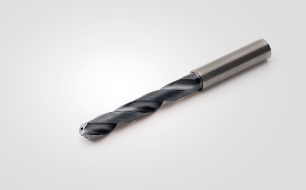
Seco organizes its Feedmax solid carbide drills by material and hole depth. Feedmax-P is listed for steel and cast iron, Feedmax-MS for stainless steel and superalloys, and Feedmax-N for aluminum and non-ferrous materials.
The range includes standard and deep-hole options. Selected series cover depths from 3xD and 5xD to 16xD, 30xD, and longer. Seco also lists self-centering geometries and material-specific combinations of carbide, coating, and geometry. Check the exact Feedmax variant before comparing dimensions, coolant configuration, or cutting data.
Source: Seco Tools Official Website
https://www.secotools.com/article/seco_feedmax___single_diameter_drills
https://www.secotools.com/article/seco_feedmax___single_diameter_drills
Kennametal KenDrill SGL
Source: Kennametal Official Website
https://www.kennametal.com/jp/ja/products/metalworking-tools/holemaking/solid-carbide-drills/hp-drills-steel-stainless-steel-cast-iron-aluminum-high-temperature-alloys/sgl-drill-coolant-stainless-steel.html?query=:relevance:allCategoriesKMT:7800158:obsoleteFacet:true&sort=&pageSize=16&category=7800158&uom=metric
https://www.kennametal.com/jp/ja/products/metalworking-tools/holemaking/solid-carbide-drills/hp-drills-steel-stainless-steel-cast-iron-aluminum-high-temperature-alloys/sgl-drill-coolant-stainless-steel.html?query=:relevance:allCategoriesKMT:7800158:obsoleteFacet:true&sort=&pageSize=16&category=7800158&uom=metric
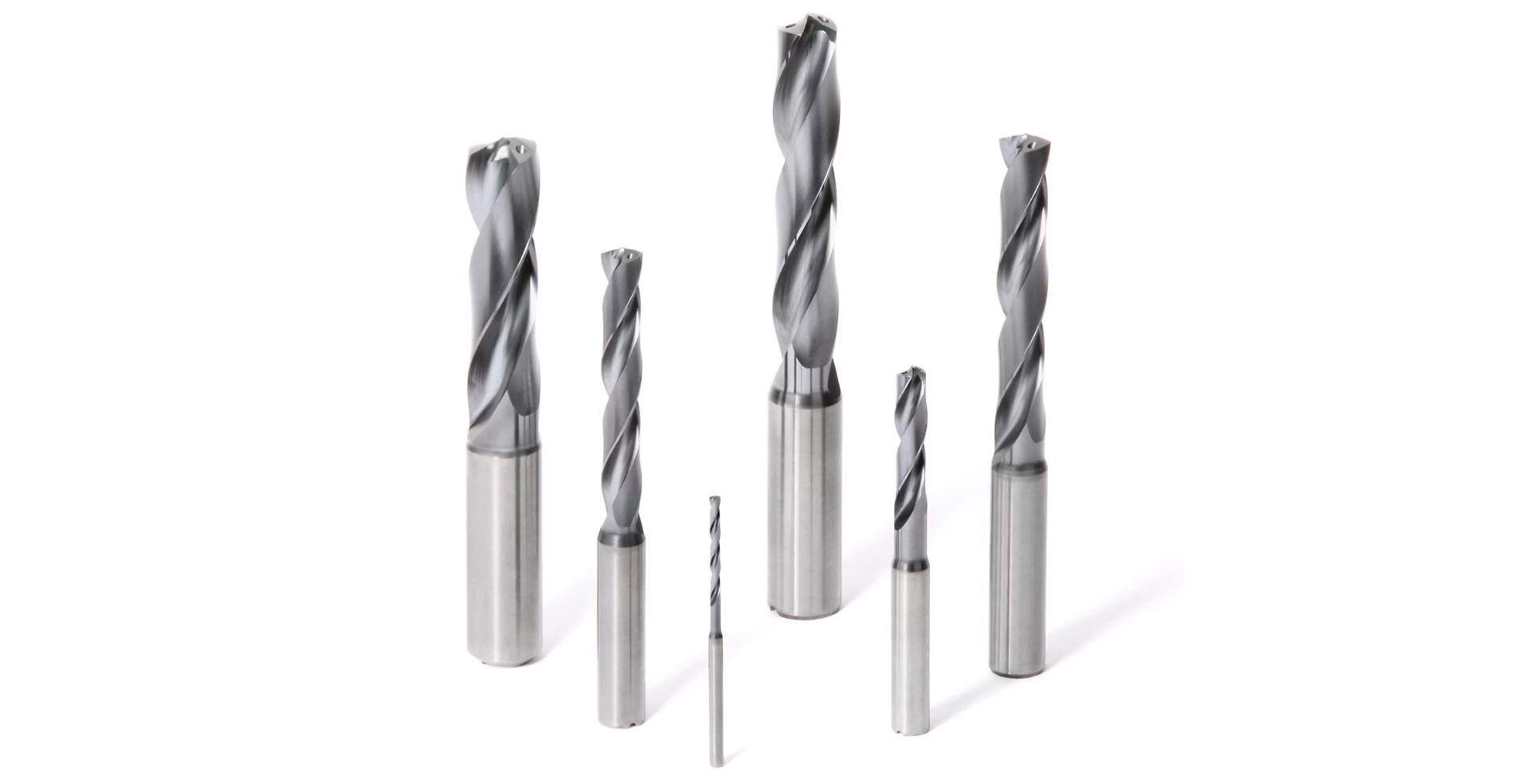
Kennametal describes the KenDrill SGL as a solid carbide deep-hole drill for stainless steel and high-temperature alloys. The 25xD family has internal coolant and a straight shank.
The wider deep-hole range also lists steel, cast iron, non-ferrous materials, and other workpiece groups, but the SGL grade and coating information focuses on stainless steel and high-temperature-resistant materials. For deep-hole work, confirm the diameter range, pilot-hole procedure, and coolant requirements for the selected drill.
Source: Kennametal Official Website
https://www.kennametal.com/us/en/products/fam.kendrill-sgl-25-x-d-internal-coolant-straight-shank-metric.100161637.html
https://www.kennametal.com/us/en/products/fam.kendrill-sgl-25-x-d-internal-coolant-straight-shank-metric.100161637.html
OSG A Brand ADO-SUS
Source: OSG Official Website
https://www.osg.co.jp/en/products/drill/spec/ado-sus.html
https://www.osg.co.jp/en/products/drill/spec/ado-sus.html
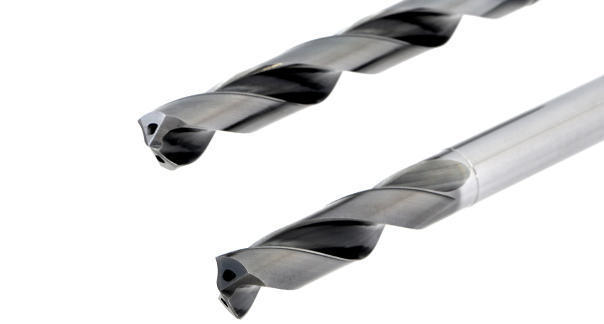
OSG's A Brand ADO-SUS is a coolant-fed carbide drill series for stainless steel and titanium alloys. OSG says the coolant-hole design improves coolant delivery and chip evacuation, while the cutting-edge geometry helps control work hardening.
The series uses WXL coating and flute geometry intended to produce compact chips. The referenced ADO-SUS-5D item has a 5xD drilling depth. It may suit stainless steel or titanium applications where heat, work hardening, or chip evacuation causes problems. Match the diameter and length before testing.
Source: OSG USA Official Website
https://osgtool.com/521039012/
https://osgtool.com/521039012/
Comparison by application
Use this table to guide product research, not as a performance ranking.
| Application to investigate | Example product family | Manufacturer-stated focus | What to confirm |
|---|---|---|---|
| General drilling with recurring edge or corner chipping | NACHI AQUA REVO | Wear and chipping resistance; standard and oil-hole options | Geometry, depth, and coolant configuration |
| 5xD drilling with through coolant | Guhring RT 100 U | Carbide, 5xD, through coolant, and multiple material groups | Preferred or secondary workpiece group |
| Material-specific drilling at various depths | Seco Feedmax | Separate series by workpiece group and drilling depth | Feedmax variant and available dimensions |
| Deep holes in stainless steel or heat-resistant alloys | Kennametal KenDrill SGL | 25xD solid carbide drilling with internal coolant | Pilot procedure, coolant supply, and diameter |
| Stainless steel or titanium with chip and heat problems | OSG A Brand ADO-SUS | Coolant delivery, chip evacuation, and work-hardening control | Depth series, diameter, and cutting data |
Check compatibility before installation
Compare these details with the current Sandvik drill:
- Nominal diameter and tolerance
- Overall, flute, and usable lengths
- Shank diameter and holder compatibility
- Point angle and cutting-edge geometry
- Coolant-hole availability
- Recommended drilling depth
- Supported workpiece materials
- Cutting-speed and feed ranges
- Pilot-hole or entry requirements
- Regrinding and recoating conditions, if applicable
Do not call a drill a direct, drop-in, or interchangeable replacement unless the manufacturer or distributor has confirmed the exact items. Matching dimensions do not guarantee matching geometry, coating, coolant delivery, or cutting data.
Source: Sandvik Coromant Official Website
https://www.sandvik.coromant.com/en-gb/tools/drilling-tools
https://www.sandvik.coromant.com/en-gb/tools/drilling-tools
How to test a replacement drill
Test each candidate against a documented baseline. Keep the machine, holder, workpiece, hole geometry, coolant conditions, and inspection method consistent whenever possible.
Record:
- Initial and measured runout
- Cutting speed and feed
- Coolant pressure and flow
- Hole count and total cutting length
- Wear location and progression
- Point of chipping or breakage
- Hole diameter and roundness
- Surface finish
- Cycle time
- Tool changes and unplanned stops
- Cost per acceptable hole
Start with the manufacturer's recommended cutting data for each drill. Do not automatically reuse the Sandvik settings. Change one major condition at a time so you can separate the effects of the drill, coolant, feed, and speed.
Source: Sandvik Coromant Official Website
https://www.sandvik.coromant.com/en-gb/knowledge/drilling/drilling-wear-and-troubleshooting
https://www.sandvik.coromant.com/en-gb/knowledge/drilling/drilling-wear-and-troubleshooting
Frequently asked questions
Which brand offers the best Sandvik drill alternative?
There is no single best brand for every application. Compare product families by material, hole depth, coolant supply, machine capability, failure mode, and required hole quality. Use a machining trial to confirm the choice.
Are these drills direct replacements for Sandvik solid carbide drills?
Not necessarily. Compare the diameter, length, shank, point geometry, coolant configuration, application range, and cutting data. Ask the manufacturer or distributor to confirm compatibility between specific items when needed.
Does chipping always mean the drill brand should be changed?
No. Runout, unstable holding, insufficient coolant, jammed chips, incorrect cutting data, or excessive wear can all cause chipping. Correct those problems before changing drills.
Should every alternative use the same cutting speed and feed?
No. Start with the recommended cutting data for each drill. After stabilizing each tool, compare tool life, hole quality, cycle time, and cost per acceptable hole.
Source: Sandvik Coromant Official Website and the manufacturers' official product pages listed above
https://www.sandvik.coromant.com/en-gb/knowledge/drilling/drilling-wear-and-troubleshooting
https://www.sandvik.coromant.com/en-gb/knowledge/drilling/drilling-wear-and-troubleshooting
Find a solid carbide drill for your application
Filter products by workpiece material, hole depth, entry geometry, coolant delivery, and accuracy. Then compare the strongest candidates in a controlled replacement trial.