
Sandvik vs Kennametal Carbide Drills
Index
Sandvik Coromant and Kennametal both offer solid carbide drills for production machining. The right choice depends on the workpiece material, hole diameter and depth, coolant setup, machine conditions, and required hole quality.
This comparison focuses on Sandvik Coromant’s CoroDrill 860 family and Kennametal’s GOdrill range to help manufacturing engineers, purchasing teams, and machine shops build an initial shortlist.
Key Takeaways
- Consider Sandvik Coromant when the application calls for a CoroDrill variant selected for a specific material and drilling condition.
- Consider Kennametal GOdrill for multi-purpose drilling from 1–20 mm and hole depths up to 8XD.
- Confirm diameter, L/D ratio, coolant configuration, workpiece condition, and availability before treating two drills as interchangeable.
- For high-volume or process-critical work, test both tools under the same machining and inspection conditions.
Sandvik Coromant Carbide Drills at a Glance
Source: Sandvik Coromant Official Website
https://www.sandvik.coromant.com/en-us
https://www.sandvik.coromant.com/en-us
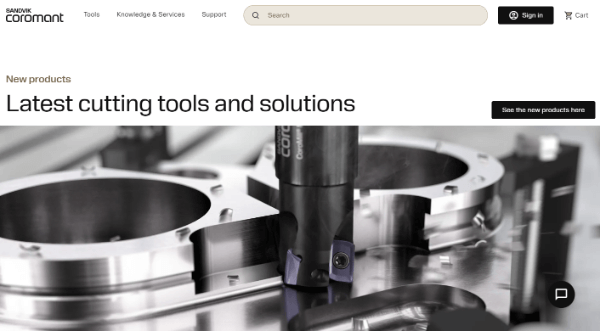
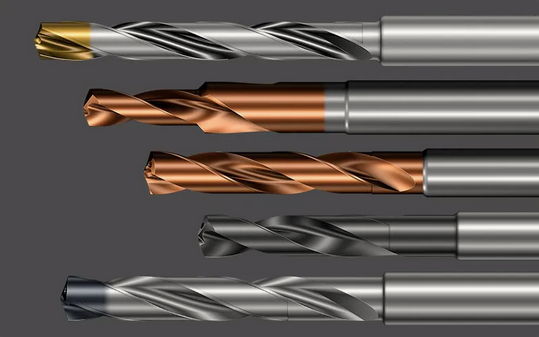
Sandvik Coromant organizes its drilling tools by holemaking method, workpiece material, tool dimensions, and application conditions. Within its solid carbide drill lineup, the CoroDrill 860 family gives buyers an application-specific starting point.
Source: Sandvik Coromant Official Website
https://www.sandvik.coromant.com/en-us/tools/drilling-tools/solid-carbide-drills/corodrill-860
https://www.sandvik.coromant.com/en-us/tools/drilling-tools/solid-carbide-drills/corodrill-860
Evaluate the exact CoroDrill 860 variant rather than the family name alone. Products within the family may differ in material application, diameter range, usable length, coolant design, geometry, and availability.
Sandvik’s catalog-based selection process works best when the tooling team has a detailed application profile. Before requesting a quote, define:
- Workpiece material and condition
- Required hole diameter and tolerance
- Hole depth and L/D ratio
- Blind-hole or through-hole geometry
- Coolant delivery method
- Machine, spindle, holder, and runout conditions
- Tool-life and cycle-time targets
These details help determine whether a standard CoroDrill configuration fits the application or whether another Sandvik drilling family should be reviewed.
Kennametal Carbide Drills at a Glance
Source: Kennametal Official Website
https://www.kennametal.com/us/en/home.html
https://www.kennametal.com/us/en/home.html
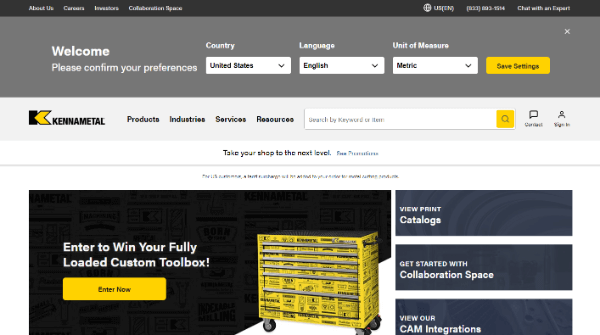
Kennametal’s solid carbide drill catalog can be filtered by workpiece material, diameter, hole depth, coolant configuration, and other application data. GOdrill is a multi-purpose option for buyers who need broad diameter coverage and a clearly defined depth range.

Source: Kennametal Official Website
https://www.kennametal.com/us/en/products/fam.godrill-5xd-straight-shank-metric.100161430.html
https://www.kennametal.com/us/en/products/fam.godrill-5xd-straight-shank-metric.100161430.html
GOdrill is available for diameters from 1–20 mm and hole depths up to 8XD. Its marginless design is intended to reduce friction and heat. Through-coolant versions are available down to 1 mm, and the TiN top layer provides a visible wear indicator.
Kennametal describes GOdrill as a cost-effective, disposable tool. That approach may fit plants that prefer routine replacement over a tooling strategy based on repeated reconditioning. The full cost comparison should also account for holes per tool, machine time, scrap risk, tool-change frequency, and local availability.
Representative Carbide Drill Comparison
Use the table below to build an initial shortlist. Confirm dimensions, application ranges, and availability with the current manufacturer data before purchasing.
| Comparison Point | Sandvik Coromant CoroDrill 860 | Kennametal GOdrill |
|---|---|---|
| Product type | Solid carbide drill family | Multi-purpose solid carbide drill |
| Selection approach | Select the variant that matches the material and drilling application | Select from a broad range with defined diameter and depth coverage |
| Diameter range | Varies by product variant | 1–20 mm |
| Hole-depth capability | Confirm the L/D option for the selected variant | Up to 8XD |
| Coolant | Confirm the configuration for the selected item | Through-coolant available down to 1 mm |
| Design focus | Application-specific geometry and product selection | Marginless design intended to reduce friction and heat |
| Wear monitoring | Confirm coating and wear guidance by product | TiN top layer serves as a wear indicator |
| Primary selection question | Which variant matches the material, depth, and hole requirements? | Does the range cover the required diameter, depth, and coolant conditions? |
CoroDrill 860 and GOdrill are not automatically equivalent products. A meaningful comparison requires matching diameter, usable length, coolant configuration, coating or substrate requirements, and intended workpiece material.
General-Purpose and Multi-Material Drilling
Shops that machine several materials must balance broad application coverage against process optimization. A multi-purpose drill can reduce inventory, simplify tool standards, and make replacement purchasing easier. A more application-specific drill may justify additional complexity when it improves stability in a repeat operation.
GOdrill provides a straightforward starting point for multi-purpose drilling. Its 1–20 mm range and maximum 8XD capability cover many common holemaking applications. Confirm the approved workpiece-material range for the exact catalog item and begin with Kennametal’s recommended cutting data.
For Sandvik Coromant, select the CoroDrill 860 variant after defining the material and drilling conditions. The suffix, geometry, dimensions, and current product documentation determine the actual fit.
Steel, Stainless Steel, and Other Workpiece Materials
Workpiece classification is only the first step in drill selection. Materials within the same general group can behave differently because of hardness, tensile strength, heat treatment, alloy content, surface scale, interrupted cuts, or chip formation.
For steel applications, specify the exact grade and hardness instead of listing only “steel.” For stainless steel, identify whether the material is austenitic, ferritic, martensitic, precipitation-hardening, or duplex. Cast iron, aluminum, heat-resistant alloys, and hardened materials also require separate application checks.
Do not transfer cutting conditions from one material to another without validation. Feed, cutting speed, coolant pressure, pecking strategy, and tool overhang can change the outcome even when drill dimensions remain the same.
Hole Depth, Diameter, and Coolant Requirements
Hole geometry often narrows the shortlist faster than brand preference. Diameter determines the available product sizes, while the L/D ratio affects rigidity, chip evacuation, coolant access, and breakage risk.
GOdrill covers diameters from 1–20 mm and hole depths up to 8XD. Through-coolant is available down to 1 mm. These published limits provide a useful first check, but buyers should still review the individual item, machine capability, and recommended operating data.
For CoroDrill 860, verify the available diameter, usable length, and L/D configuration for the exact variant. Also confirm whether the drill uses internal coolant and whether the machine can provide the required flow and pressure.
Deeper-hole applications also require a review of:
- Entry conditions and pilot-hole requirements
- Coolant pressure and filtration
- Chip shape and evacuation path
- Tool overhang and holder accuracy
- Spindle runout
- Recommended drilling cycle
- Breakthrough conditions
- Blind-hole chip clearance
A drill that performs reliably at 3XD should not be assumed to deliver the same result at 8XD.
Microdrilling and Small-Diameter Holes
Small-diameter drilling is highly sensitive to runout, tool handling, chip packing, coolant access, and cutting-edge damage. Setup errors that have little effect on a larger drill can cause rapid wear or breakage in a 1 mm application.
The GOdrill range starts at 1 mm, with through-coolant available at that diameter. The machine and holder must still provide the runout control and stability required for the selected size.
For small-diameter CoroDrill applications, confirm the minimum available diameter and coolant configuration in Sandvik’s current product listing. The family name alone does not confirm that a specific diameter, length, or material application is available.
Before changing a microdrill, document the current breakage point, tool runout, holder type, coolant pressure, chip condition, entry surface, and holes per tool.
Tool Life, Hole Quality, and Process Stability
Evaluate tool life together with hole quality and process stability. A drill that produces more holes but causes greater diameter variation, poor straightness, excessive burrs, or unpredictable failure may increase the total cost of the operation.
Define the acceptance criteria before testing either brand. Common measures include:
- Acceptable holes per tool
- Hole diameter and roundness
- Straightness and positional accuracy
- Surface finish
- Entry and exit condition
- Burr height
- Cycle time
- Spindle load
- Failure mode
- Tool-change consistency
Kennametal identifies GOdrill’s TiN top layer as a wear indicator. Operators can incorporate this visible condition into a documented replacement standard, but the production limit should still be based on measured hole quality and controlled wear.
For Sandvik tools, confirm the coating, wear criteria, and reconditioning guidance for the selected item. Use the same inspection frequency and end-of-life definition when comparing the brands.
Purchasing and Tool Management Considerations
Technical fit is only part of the purchasing decision. The required size must also be available within the production schedule, supported by usable cutting data, and accessible through a practical purchasing channel.
Kennametal’s digital product environment includes product filters, account tools, cart and quote functions, technical support, distributor information, CAD downloads, and reconditioning services. These resources can help buyers verify product data and establish a repeat-purchasing process.
For Sandvik Coromant, confirm the local ordering channel, standard availability, lead time, cutting recommendations, product data, and available support services for the selected CoroDrill item.
Compare the following commercial factors separately from cutting performance:
- Unit price
- Cost per acceptable hole
- Standard stock and lead time
- Minimum purchasing quantity
- Reconditioning policy
- Replacement consistency
- Distributor support
- Technical application support
- CAD and digital tool data
- Availability of equivalent sizes
Conclusion
Sandvik Coromant and Kennametal both offer solid carbide drilling options for production machining, but the final choice depends on the specific tool and application. Use Sandvik’s CoroDrill selection path when the job requires an application-specific variant. Consider Kennametal GOdrill when its 1–20 mm range, maximum 8XD capability, and coolant configuration cover the application.
Before standardizing either drill, confirm current specifications, availability, cutting recommendations, and tool-management requirements. For critical applications, select the tool that delivers the lowest controlled cost per acceptable hole under the plant’s actual machining and inspection conditions.
Frequently Asked Questions
Which is better for carbide drilling, Sandvik Coromant or Kennametal?
Neither brand is best for every application. Choose based on material, hole depth, coolant, machine conditions, and required hole quality.
What is the main difference between CoroDrill 860 and GOdrill?
CoroDrill 860 includes application-specific variants. GOdrill is a multi-purpose range covering diameters from 1–20 mm and depths up to 8XD.
Can Kennametal GOdrill be used for small-diameter holes?
Yes. The range starts at 1 mm, with through-coolant versions available at that diameter.
How important is internal coolant?
Internal coolant helps manage heat and evacuate chips, especially in deeper or smaller holes. Confirm the configuration for the exact drill.
How should Sandvik and Kennametal drills be compared?
Test them under the same machining and inspection conditions. Compare cost per acceptable hole rather than purchase price alone.